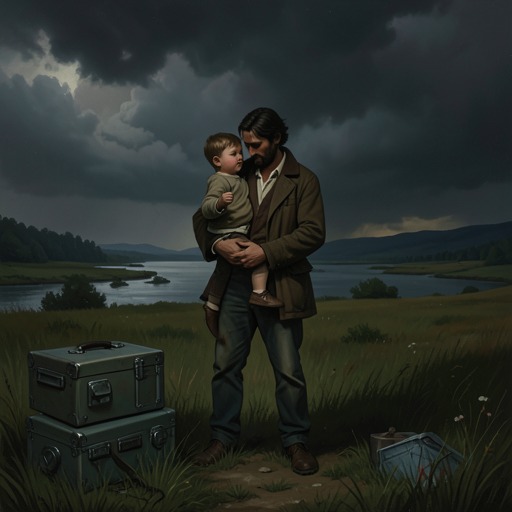
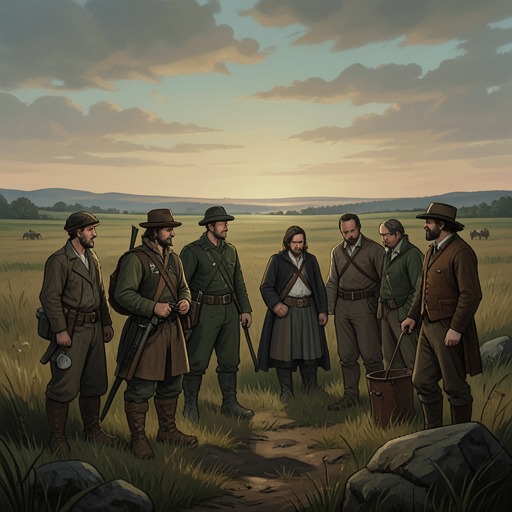
George's indirect-vision experiment
Bird BoxGeorge’s indirect-vision experiment is the Shillingham house community’s first sustained attempt to test whether altered or mediated sight might reveal the creatures without exposing a viewer to their deadly effect. Built from research into refraction, optical illusions, and cameras, the experiment turns a desperate search for protection into a controlled test. Its result is devastating: George is harmed while watching the footage, and the survivors burn the recording, extinguishing the possibility of learning what it contained.
Theory and Preparation
George’s proposal takes shape amid the community’s repeated attempts to make sense of the catastrophe. He suspects that a form of life is responsible, and later considers whether indirect or refracted vision could offer a way to observe it safely. Tom recalls that he and George studied material about eyesight, optical illusions, refracted light, and telescopes, and drew diagrams together at the kitchen table. Their research is practical rather than abstract: George wonders whether victims had worn glasses and whether a closed window, viewed at particular angles, might provide protection.
The experiment grows more urgent as news reports repeat themselves without offering usable guidance. George wants to test his altered-vision theory, while Tom fears the danger and doubts that five hours of recording could capture anything. George nevertheless frames the experiment as a possible contribution to humanity’s survival: if indirect vision worked, he might help find a way to counter the epidemic. The contrast between the scale of that hope and the uncertainty of the method gives the test its central tension.
Recording and Decision to Test
George secretly sets an old VHS camera behind one of the blankets in the dining room and leaves it recording. The next morning, Tom finds him asleep on the floor beside it. George tells Tom that he has recorded five hours of footage and believes it might contain a cure. He identifies the proposed method as indirect vision through film and insists that they watch the recording.
George then presents a plan to the housemates: he will be tied to a chair in an upstairs bedroom while he watches, on the premise that restraint will prevent him from harming himself if the experiment goes wrong. Don objects angrily, warning that they do not understand what they are dealing with and that an incident involving George could threaten everyone. Felix and Tom do not oppose the plan; the group votes, with Don alone against proceeding. Don considers leaving, but the others talk him out of it. George finally insists that he does not need permission to act in his own house, and Tom agrees to tie him to the chair.
The Test and Its Cost
George watches the footage alone upstairs. For two hours the housemates hear nothing from him; then he begins calling to Tom, laughing, screaming, and howling. The sounds and the chair striking the floor signal that the safeguards have not kept the experiment contained. Jules rises to help, but Tom stops him: neither can intervene safely while George is watching. The group is left to listen until the noise ceases.
After waiting, the housemates go upstairs together, blindfolded. They turn off the VCR before opening their eyes, and discover that George has been gravely injured while struggling against the restraints. The chair, ropes, and recorded images have not made indirect sight safe. The experiment’s procedure was designed to limit the danger to one person, but the outcome gives the survivors no means of reversing what has happened or recovering the knowledge George hoped to gain.
Destruction of the Tape and Significance
Once the group has attended to George, Don insists that they burn the tape, and they do. With the recording goes their first serious theory about how the creatures might be observed or resisted. Tom’s recollection makes the loss twofold: the experiment has cost George his life, and the survivors also destroy its sole record, leaving them unable to inspect or learn from the footage.
The episode closes on a qualified judgment. Tom still believes George was right to suspect creatures before the news identified them as the cause, and says that a different approach might have allowed him to change the world. That possibility remains counterfactual: the evidence confirms neither what George saw nor whether another method could have worked. The experiment’s importance lies in that unresolved divide between insight and method. George’s suspicion may have been prescient, but the attempt to convert it into direct evidence proves fatal, and the surviving group is left with a warning rather than a cure.